Case Studies

Surgical Assist Robot

Productizing the world's first
force-feedback surgical robot.

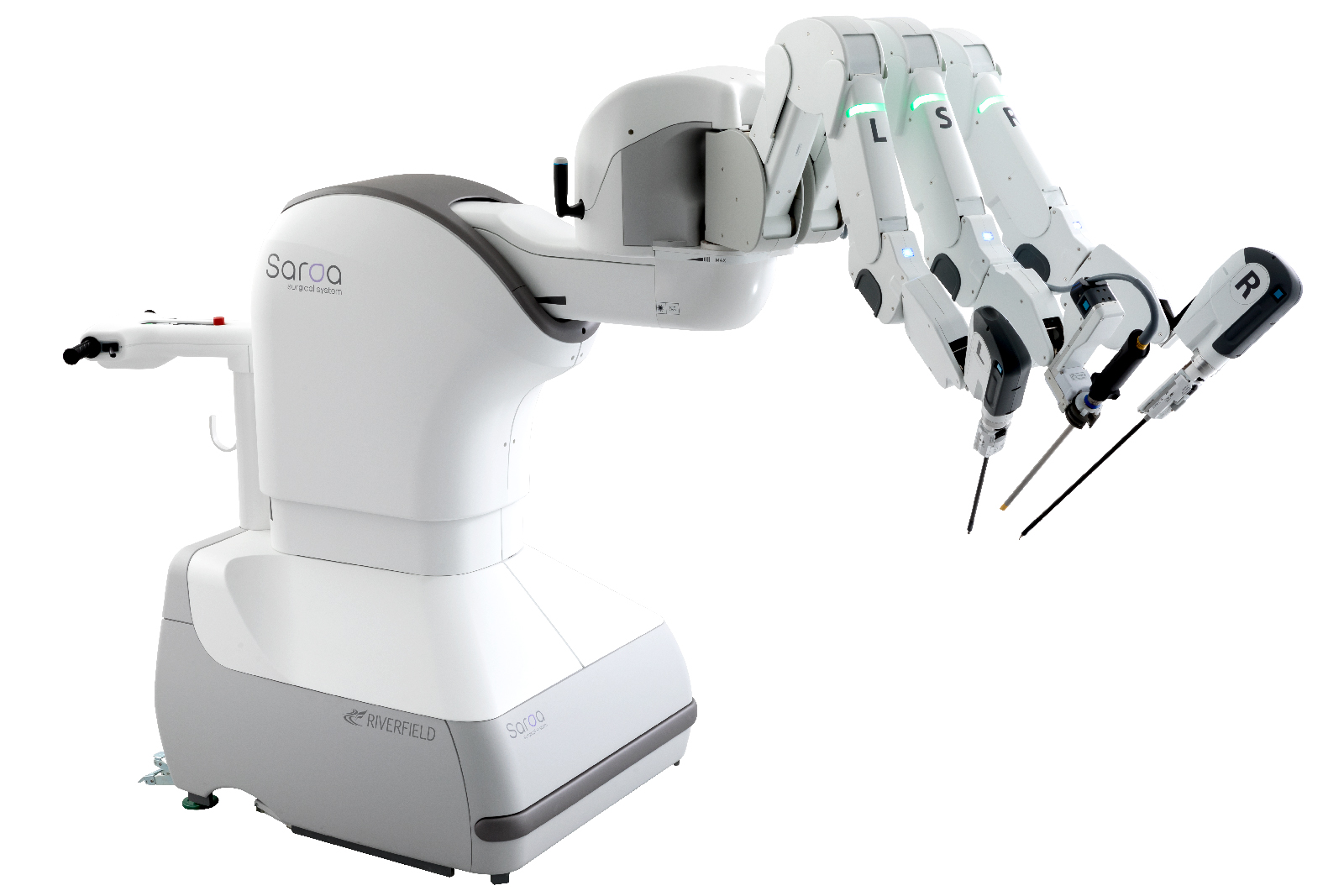
Brought in while the specs were still taking shape, PEC helped productize the world's first force-feedback surgical robot. We reconciled a wide range of motion with a compact body — stepping beyond design into the housing engineering itself — to land a presence that stands right beside the surgeon.
DesignInterfaceVisual
Surgical Assist Robot

Overview

Product: Surgical assist robot (Saroa Surgical System)
Client: RiverField Inc.
Timeline: About 4 years (concept to mass production)

Background

When PEC came on board, the device’s specifications were still taking shape. The question was how to turn the world’s first force feedback (haptics) into a real product — its form, its controls, its presence in the operating room. We began by shaping that very direction.

Saroa also relies on an arm mechanism unlike any competitor’s. It had to keep a wide range of motion while staying small enough to stand right beside the surgeon — and reconciling these opposing demands, through both design and engineering, was essential.
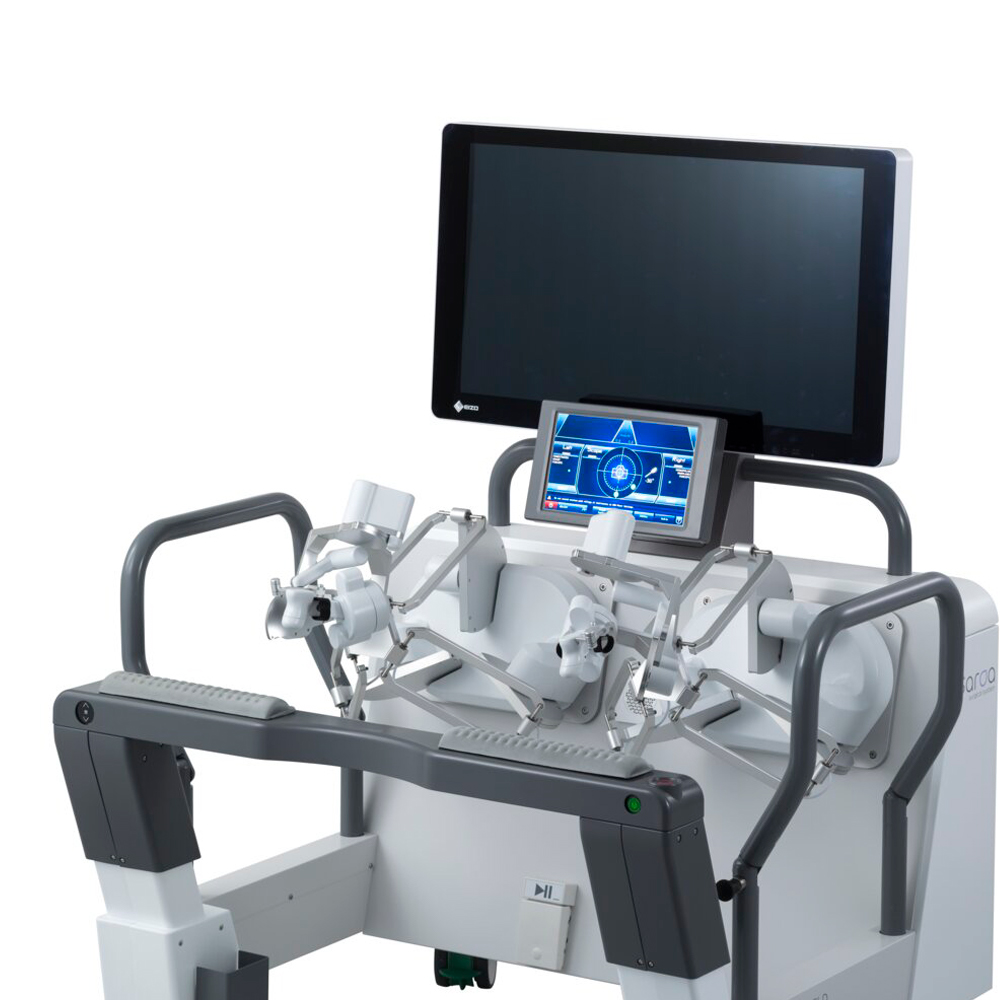
Surgeon console (the surgeon's operating station)
Surgeon console — the command station the surgeon works from. PEC designed its control experience.

Approach

PEC worked alongside the engineering team from concept all the way to mass production.

  1. Visualizing the concept to drive decisions — Scale models and concept CG let everyone picture the finished product, giving stakeholders a shared basis to discuss and decide on.
  2. Designing “something close to people” — Saroa is a compact surgical robot that stands right next to the surgeon, used at a genuinely human distance. So we aimed for a gentle, trustworthy impression — shaping the housing, color, and details to feel approachable rather than imposing. Where large floor-standing systems are the norm, we set Saroa apart with a size and presence that stays close to people. We handled the exterior design, UI design, and the product logo and colors as one consistent whole.
  3. Covering design that unites wide motion with a small body — The unique arm has a wide range of motion, and conventional covering would have made the device bulky. A cover that neither blocks the motion nor enlarges the device demanded real engineering know-how. PEC stepped beyond design into the housing engineering itself to make it work — directly enabling a smaller, lighter device.

Outcome

  • Visualizing the concept kept stakeholder decisions moving smoothly
  • Exterior, UI, logo, and color came together as one world, giving the product a natural presence as a “partner in surgery”
  • Despite its unique mechanism, the body stayed compact next to competing systems — small enough for the surgeon to stand right alongside
  • Over roughly four years, we partnered from concept through to mass production

Working Style

We read intent without needing detailed instructions, and give nuance a form. We keep back-and-forth and rework to a minimum, and hand work off cleanly. We adapt flexibly to the frequent spec changes that come with a venture. Partnering for the long haul — from concept to mass production — comes from this way of working.

“Bringing the surgeon’s finest touch within everyone’s reach” — the vision RiverField pursues, which PEC supported through the product’s presence and operating experience.

Process

  1. Concept & Research
  2. Basic Design
  3. Detailed Design
  4. Prototyping & Testing
  5. Production Readiness
  6. Operation & Lifecycle