Case Studies

Dialysis Monitoring Device

A bold layout change for a
more staff-friendly machine.

Observing dialysis up close, PEC uncovered a strain the manufacturer hadn't registered: the burden of setup and breakdown. We gathered the main devices above waist height, rebuilding the layout so staff can work standing, without stooping — from the exterior all the way into the housing.
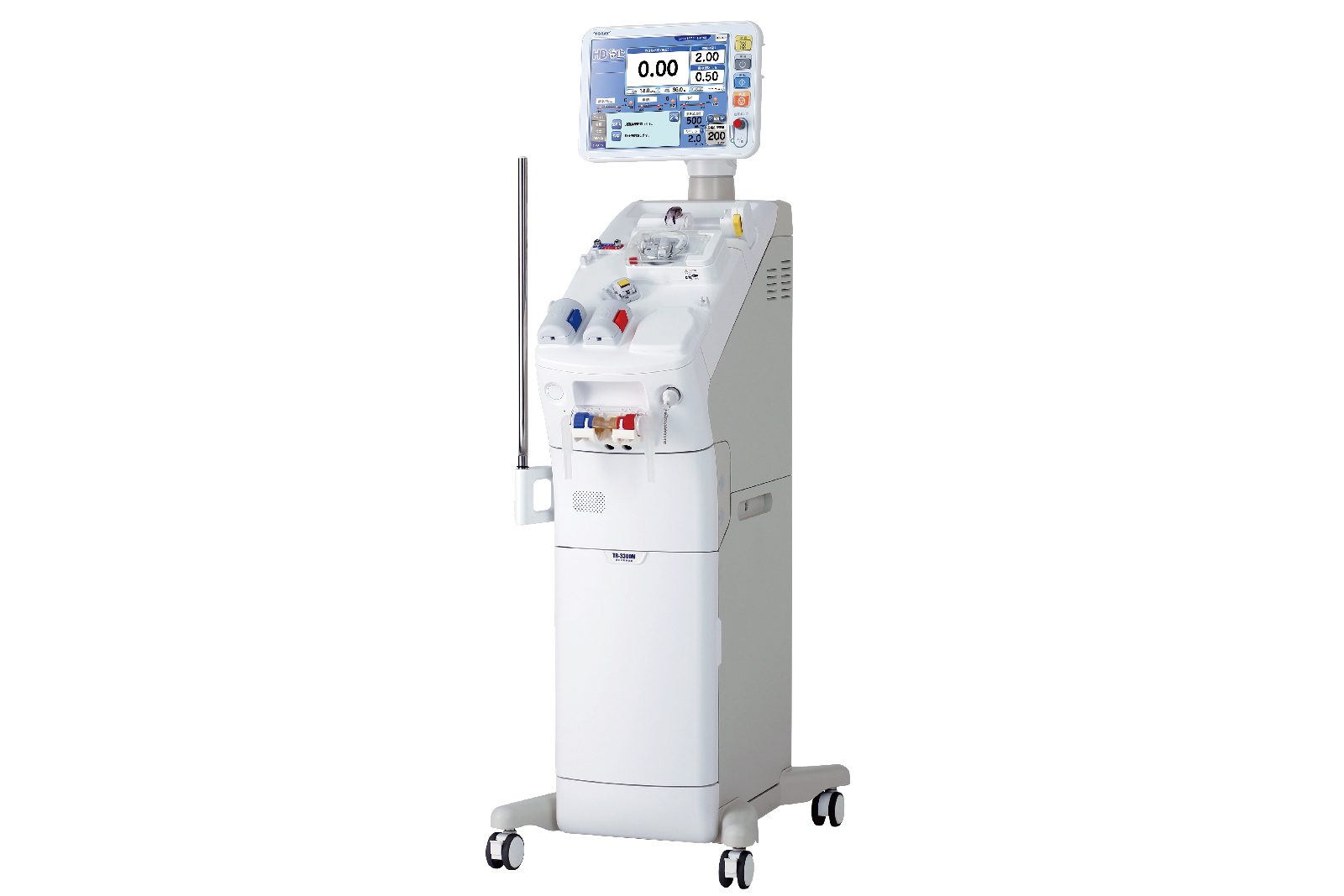
DesignEngineering
Dialysis Monitoring Device

Overview

Product: Dialysis monitoring device (TR-3300M)
Client: Toray Medical Co., Ltd.
Timeline: About 3 years

Background

A dialysis monitoring device controls and monitors hemodialysis treatment. Every session begins with setting the machine up and ends with breaking it down again.

Watching real treatment up close, PEC found that this routine was a serious physical strain on the staff. Handling the dialysis tubing was especially awkward, and the work was repeated again and again from a stooped posture.

This “invisible burden” was something the manufacturer had not strongly registered. Rethinking the device’s layout from the ground up to address it — that was where the project started.
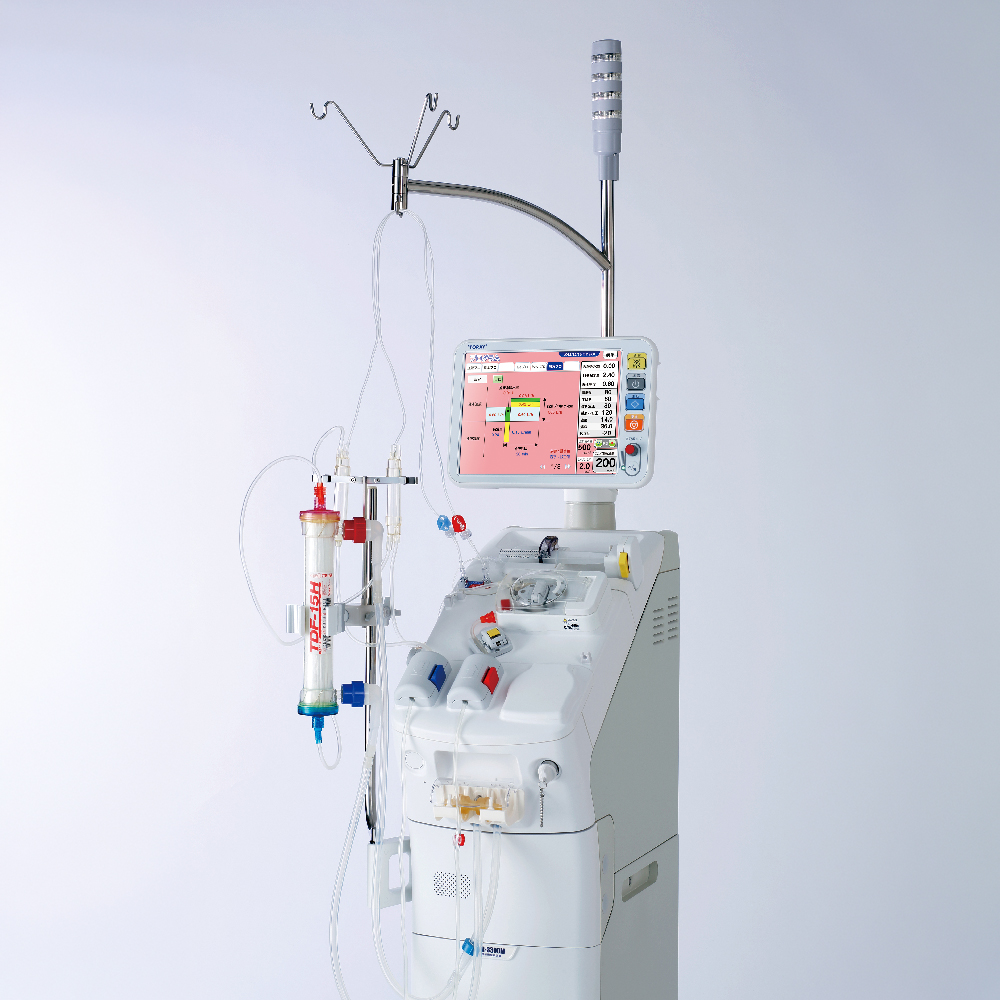
The machine set up for treatment, with blood circuit and dialyzer attached
Set up for treatment — with the blood circuit and dialyzer attached. The main devices are gathered above waist height so they can be handled standing.

Approach

  1. Defining the real problem through on-site observation — We watched how setup and breakdown actually played out in treatment, and pinpointed the source of the strain (the stooping, the awkward tubing). Rather than a cosmetic refresh, we made the physical burden itself the object of design.
  2. A layout that gathers the main devices “above the waist” — Frequently handled devices such as the blood pump and syringe pump were placed at waist height and above. The result is a configuration you can set up and break down without stooping, easing the repeated strain at its root.
  3. Going into the exterior and housing to make the bold layout real — Moving the devices upward changes the internals significantly. PEC took on not just the exterior but the housing engineering itself, turning an ergonomic layout into something that actually holds together.

Outcome

  • With devices placed so the work is done standing, setup and breakdown complete without stooping, cutting the physical strain
  • A layout built around the staff’s working posture, improving operability
  • We rethought a placement long taken for granted in dialysis machines, realizing a genuinely novel, staff-friendly device

Working Style

PEC always starts from observing the field. Here too, we found a latent need the manufacturer hadn’t been conscious of — the burden of setup and breakdown — and carried it all the way into the form of the device.

Beyond meeting the stated requirements, we find the burdens no one has put into words yet, and give them a form. That, we believe, is PEC’s value.

“Awkwardness” only becomes visible once you stand in the field. Finding the burdens no one has named, and giving them form — that is design at PEC.

Process

  1. Concept & Research
  2. Basic Design
  3. Detailed Design
  4. Prototyping & Testing
  5. Production Readiness
  6. Operation & Lifecycle